Career evidence
Turn seasonal work into useful evidence for your next application
Keep a factual record of the work, decisions and skills from a temporary role without exposing customer or employer information.

In this guide
The useful starting point
Record the situation, your responsibility, the action you took and the evidence you are allowed to share. Use real examples to explain transferable skills; never invent numbers or present a team result as your individual achievement.
A temporary role can give you useful examples of reliability, communication, judgment and learning. The challenge is remembering the details when an application or interview comes later. A short weekly note is easier to turn into a credible story than a vague claim that you worked well under pressure.
Start with the responsibilities you actually held
Write down the tasks you were assigned and the decisions you were allowed to make. Include the systems you learned, the people you worked with and the situations that required care. Keep customer names, transaction details, screenshots and internal documents out of a personal record unless the employer explicitly permits their use.
Do not assume a seasonal position will become permanent. Ask the employer about the role's duration and expectations directly. Your evidence record is useful whether you stay, apply elsewhere or decide that this kind of work is not a good fit.
Keep four lines after a useful moment
- Situation: what was happening, in general terms?
- Responsibility: what part belonged to you?
- Action: what did you do and why?
- Evidence: what happened that you can honestly describe or verify?
A result can be qualitative. You might have clarified an instruction, documented a recurring question or completed a handoff correctly. If you do not have a verified measurement, explain the observable change without adding a percentage.
A fictional example
Imagine someone helping at a busy shop notices that colleagues give different answers about pickup instructions. Their manager approves a short internal checklist. The worker drafts it, checks the wording with the manager and makes sure the team knows where to find it.
A grounded application statement could be: Drafted a manager-reviewed pickup checklist to give the team a consistent reference during seasonal shifts. It should not become Increased customer satisfaction by 40% unless that result was genuinely measured and can appropriately be shared.
In an interview, the interesting part may be the judgment: the worker checked the policy before sharing a new instruction. Explain that reasoning, rather than treating every example as a claim of dramatic impact.
Connect the example to the next role
Read a target job description and identify two or three responsibilities that match your evidence. A pickup checklist may demonstrate clear writing, teamwork or process awareness. It does not automatically prove expertise in management, analytics or a tool you never used.
Use AI to question and organize your notes, with sensitive details removed. Ask: Which parts of this example support the responsibility below? What is unclear? Identify any claim that goes beyond the evidence. Do not invent duties, numbers or experience. Check the rewrite against your own notes.
Prepare the next conversation
Before leaving a role, ask about the employer's reference process and whether a manager would be comfortable discussing your work. Keep your own contact details current and respect any rules about retaining work materials.
Build your next example with the Proof Studio, read how to describe accomplishments without invented numbers, and explore career support with Ashley if you want help choosing the strongest evidence.
The NRF forecast below describes national seasonal retail expectations. It is background context, not a list of current openings or a prediction of your chances with a particular employer.
Sources and further reading
Sources checked October 18, 2026. Review the linked publisher information for current details.
Put one idea to work
Choose a task you understand, review the output, and record evidence of the contribution you made.
Try an AI-at-work playbook →Explore more from JobCoachGet new JobCoach guides in your inbox →Keep practicing
 Remote work & AI
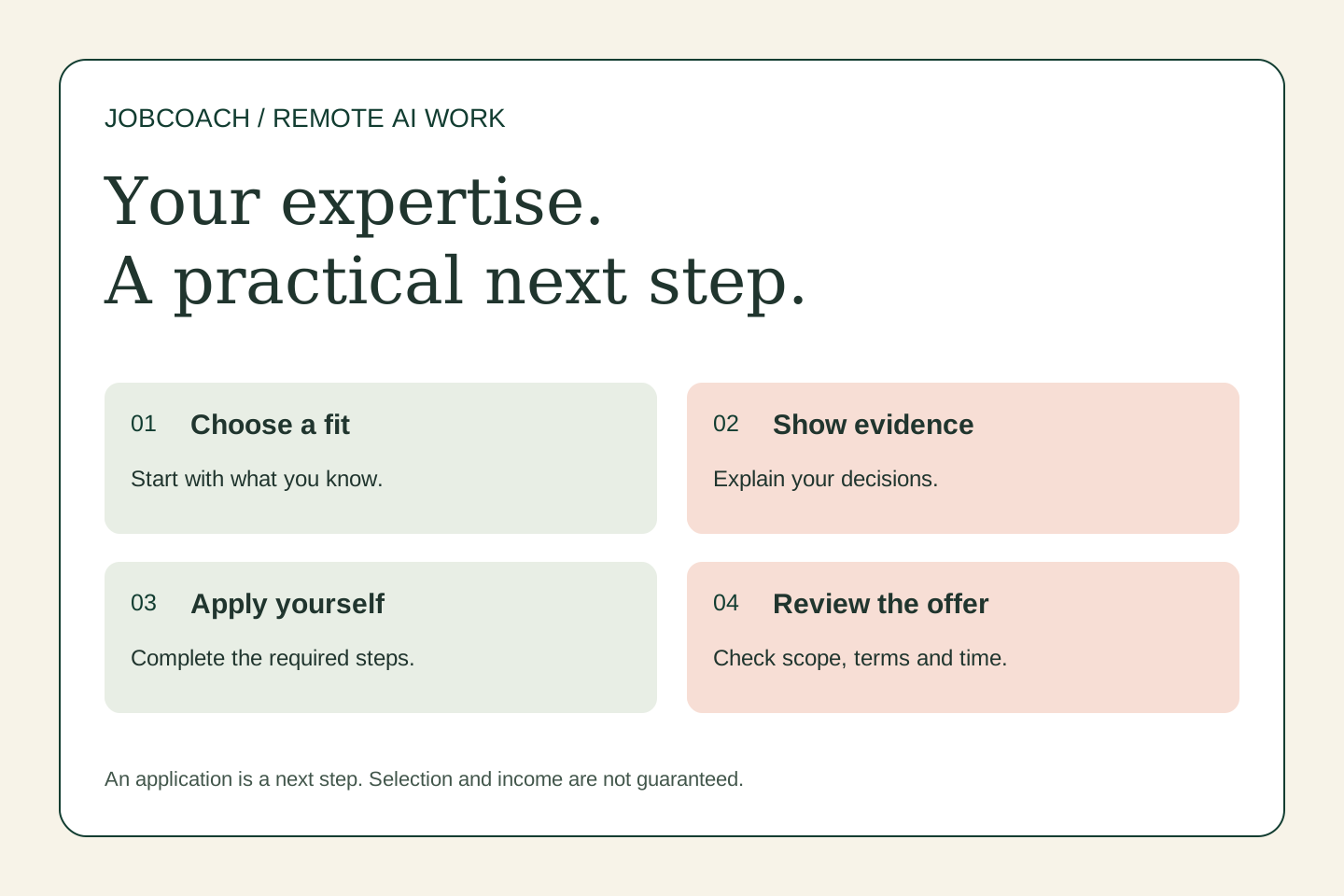
Applying to Mercor: a practical guide to remote AI contract work
Remote work is a location arrangement, not a promise of a steady job. Learn where Mercor fits, how to prepare a focused application, and what to check before accepting a project.
October 31, 2026 · 5 min read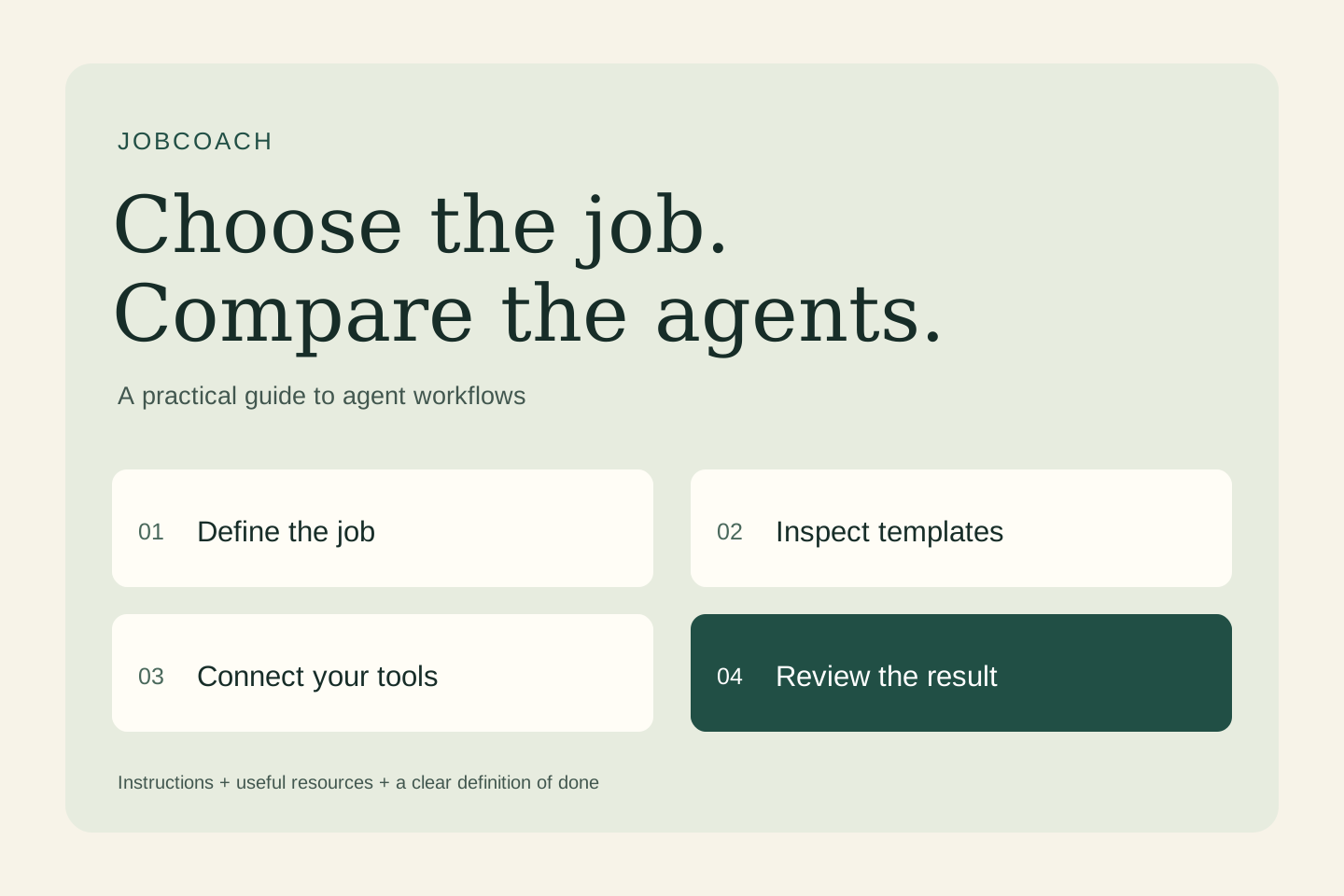 AI agents
Grok Bot for your job search: templates, Dots, Duet, and useful limits
How Grok Bot works, templates you can inspect, and a practical comparison with Dots, Claude Duet, Muse, Manus and Copilot Studio for an application preparation brief.
October 28, 2026 · 7 min read