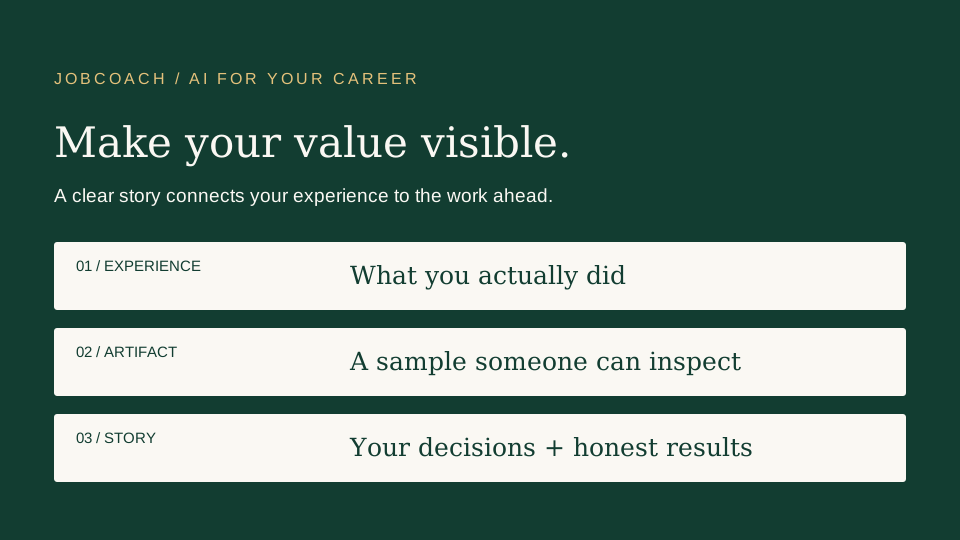
Work through the steps
- Pick one audience and one channel you can maintain. Turn a real project into three posts: a problem you noticed, a decision you made, and what you learned. Protect employer and customer information.
- Use AI to draft from your notes, then add your actual perspective. Link to the full case study and reply thoughtfully to relevant conversations. Avoid automated generic comments or mass direct messages.
- For your portfolio, use a descriptive page title, your name, relevant role language, readable text, clear headings, image alt text, and an accessible contact route. Explain the problem and evidence directly.
- Check that important pages are public and indexable. Link consistent professional profiles and cite sources for research. Track relevant conversations and portfolio visits rather than promising rankings. Google says its normal SEO practices also apply to its AI search features.
Try this prompt
Replace the brackets with reviewed information. Copy into your chosen AI tool; this page does not run agents or send your information.
Create a two-week personal visibility plan from this case study for [audience] on [channel]. Draft three posts with a different useful insight, an accurate case-study summary, and portfolio title and description. Preserve factual limits. Suggest a simple way to learn which topics lead to relevant conversations. No invented outcomes, keyword stuffing, automated outreach, or guaranteed SEO/AEO/GEO results.
Before you call it finished
Does every post teach or show something specific? Is essential portfolio content readable without relying on images? Are results described accurately?
Build useful professional connections ↗Return to the training hub · Next lesson: Create your AI Chief of Staff and career team →